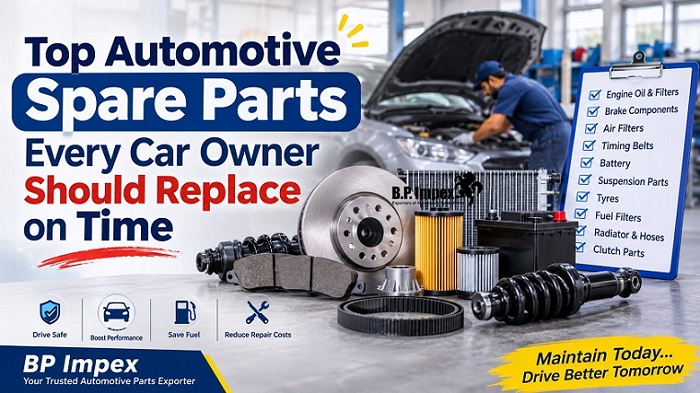
A vehicle may appear to be running perfectly, but several components gradually lose their effectiveness through regular use. Some parts experience friction, others are exposed to heat, pressure, dust, moisture, and changing road conditions. Although these changes are not always noticeable during everyday driving, ignoring them can affect vehicle performance, fuel efficiency, passenger comfort, and road safety.
Timely replacement is an essential part of responsible vehicle ownership. Rather than waiting for a component to fail completely, car owners should understand which parts require periodic inspection and when replacement becomes necessary. Following a proper maintenance schedule also helps prevent unexpected breakdowns and reduces the possibility of expensive repairs.
For vehicle owners, workshops, retailers, and international automotive buyers, understanding the importance of quality replacement components is equally valuable. BP Impex focuses on automotive Parts exports, helping businesses source parts for different vehicle applications and market requirements.
Why Timely Replacement of Car Components Matters
Every vehicle contains components designed to operate within specific service conditions. Their performance gradually changes with mileage, driving habits, environmental exposure, and maintenance quality. A component that performs reliably in city traffic may experience faster wear under frequent highway driving or heavy-load conditions.
Delaying replacement can also affect other connected systems. For example, worn brake pads may damage brake discs, while an ageing timing belt can create serious engine complications if it breaks. Similarly, neglected filters may restrict airflow or fuel delivery.
Regular inspection allows owners to identify developing problems before they become major mechanical failures. It also provides an opportunity to select suitable components according to manufacturer specifications rather than making rushed purchasing decisions after a breakdown.
1. Engine Oil and Oil Filters
Engine oil performs several important functions, including lubrication, heat management, and reducing friction between moving components. As the engine operates, the oil gradually collects contaminants and loses some of its original properties.
The oil filter captures dirt, metallic particles, and other impurities circulating through the lubrication system. Over time, its filtering capacity decreases, making periodic replacement necessary.
Car owners should follow the recommended oil grade and replacement interval specified in the vehicle owner’s manual. Driving in dusty environments, frequent short-distance journeys, and heavy traffic may influence maintenance requirements.
Replacing engine oil without changing an excessively used filter can compromise the benefits of fresh lubrication. Both should therefore be considered during scheduled servicing.
2. Brake Pads and Brake Discs
The braking system directly influences vehicle safety. Brake pads generate friction against the discs to reduce wheel speed whenever the driver applies the brakes. Continuous friction gradually reduces the thickness of the friction material.
Common warning signs include squealing noises, grinding sounds, increased stopping distances, and vibrations during braking. Some vehicles also feature brake-wear indicators that alert drivers when the pads approach their service limit.
Brake discs should be inspected alongside the pads because excessive wear, surface damage, or uneven thickness can affect braking performance. Replacing only the visibly worn component without checking the complete assembly may result in further problems.
Brake maintenance should never be postponed when abnormal symptoms appear. Owners should have the system inspected by a qualified technician and replace components according to the manufacturer’s specifications.
3. Air Filters and Cabin Filters
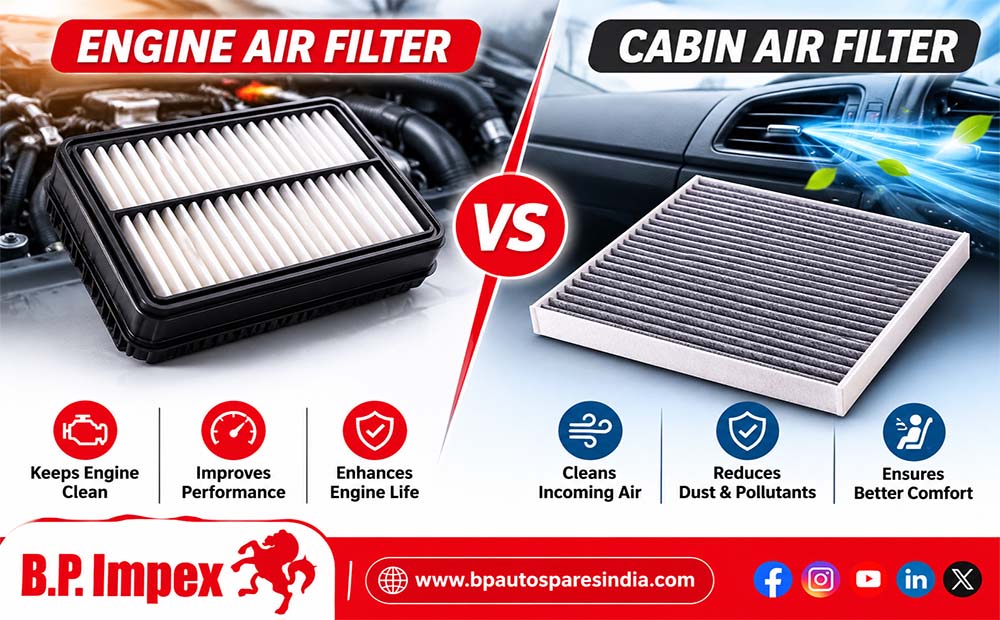
Air filtration is important for both engine operation and passenger comfort. An engine air filter prevents dust, dirt, and airborne particles from entering the combustion system. When the filter becomes clogged, airflow may become restricted, potentially affecting engine efficiency.
A cabin filter serves a different purpose. It helps reduce dust, pollen, and other airborne contaminants entering the passenger compartment through the ventilation system.
Vehicles driven in construction zones, rural environments, or dusty urban conditions may require more frequent filter inspections. Reduced airflow from the air-conditioning system, unpleasant cabin odours, or visible dirt accumulation can indicate that attention is needed.
These relatively inexpensive components can make a meaningful difference when maintained correctly.
4. Timing Belts and Drive Belts
Belts play an important role in transferring mechanical power between different tata engine components. A timing belt synchronises the movement of the crankshaft and camshaft, allowing the engine’s valves and pistons to operate in the correct sequence.
A damaged timing belt can cause severe internal engine damage in certain engine designs. Unlike some other components, it may fail without providing an obvious warning immediately before failure.
Accessory or drive belts operate components such as alternators and, depending on the vehicle design, air-conditioning compressors and other systems. Cracks, glazing, fraying, and unusual noises indicate the need for inspection.
Replacement intervals vary between engines. Owners should follow the manufacturer’s maintenance schedule and replace related tensioners or pulleys when recommended.
5. Battery and Electrical Components
A vehicle battery supplies electrical energy for starting the engine and supporting various electronic systems. Battery performance gradually declines because of age, temperature variations, charging conditions, and repeated discharge cycles.
Slow engine cranking, dim headlights, electrical irregularities, and difficulty starting the vehicle may indicate battery-related issues. However, these symptoms can also result from alternator problems, loose connections, or damaged wiring.
A battery test can help determine its remaining capacity and charging condition. Electrical terminals should also be checked for corrosion and secure connections.
Ignoring electrical warning signs can leave drivers stranded unexpectedly. Periodic testing is particularly useful before long journeys and during seasonal temperature changes.
6. Clutch Components
The clutch assembly transfers engine power to the transmission while allowing the driver to change gears. Its friction material gradually wears through repeated engagement, particularly in vehicles frequently driven through congested traffic.
Common symptoms of clutch wear include slipping under acceleration, difficulty changing gears, unusual noises, and changes in pedal feel. Some vehicles may also develop clutch-related vibrations.
The clutch plate, pressure plate, release bearing, and related components work together. Their condition should be evaluated before deciding which parts require replacement.
Continuing to drive with a slipping clutch can increase repair costs and affect driving performance. Timely inspection helps prevent unnecessary stress on the transmission system.
7. Suspension Bushes, Shock Absorbers and Ball Joints
The suspension system supports vehicle stability, ride comfort, and tyre contact with the road. Shock absorbers control spring movement, while bushes and ball joints help maintain correct movement and alignment between suspension components.
Worn shock absorbers may cause excessive bouncing, reduced stability, and uneven tyre wear. Damaged bushes can produce knocking noises, while worn ball joints may create steering irregularities and handling problems.
These components deserve particular attention in vehicles regularly used on uneven roads or carrying heavy loads.
A suspension inspection should include mounting points, joints, rubber components, and related connections. Replacing damaged components promptly helps maintain predictable handling and reduces additional stress on surrounding parts.
8. Tyres and Wheel Alignment Components
Tyres are the only vehicle components that maintain direct contact with the road surface. Their condition influences braking distance, cornering stability, traction, and overall driving comfort.
Uneven tread wear, visible cracks, sidewall damage, and insufficient tread depth are reasons to arrange a professional inspection. Tyre pressure should also be checked regularly because incorrect inflation can increase wear and affect handling.
Wheel alignment and balancing are equally important. Incorrect alignment may cause the vehicle to pull towards one side or produce uneven tyre wear.
Tie-rod ends and related steering components should be checked when steering feels loose or unusual. Replacing damaged parts and correcting alignment can help extend tyre life.
9. Fuel Filters and Fuel System Components
Fuel filters help prevent contaminants from reaching sensitive fuel-system components. Depending on the vehicle’s design, restricted fuel flow can contribute to difficult starting, inconsistent acceleration, or reduced engine performance.
The replacement interval depends on the fuel system and manufacturer recommendations. Diesel and petrol vehicles may use different filtration arrangements, so selecting the correct specification is important.
Fuel pumps, injectors, seals, and connecting lines should also be inspected when fuel-delivery problems occur. Replacing components without identifying the underlying cause may not resolve the issue.
A professional diagnosis helps determine whether the problem originates from a clogged filter, faulty pump, contaminated fuel, or another mechanical issue.
10. Radiator, Coolant Hoses and Water Pump
The cooling system maintains an appropriate operating temperature and protects the engine against overheating. Its major components include the radiator, water pump, thermostat, coolant hoses, and associated connections.
Coolant hoses can deteriorate through repeated heating and cooling cycles. Cracks, swelling, leakage, or hardened rubber indicate that replacement may be necessary.
The water pump circulates coolant through the engine and radiator. A failing pump may produce coolant leakage, unusual noises, or temperature fluctuations.
Owners should periodically check coolant levels and inspect the system for visible leaks. Using the recommended coolant type and following the manufacturer’s service instructions are important for long-term reliability.
Choosing the Correct Replacement Components for Your Vehicle
Selecting a replacement component requires more than matching its general appearance. Two vehicles from the same manufacturer may use different components depending on their model year, engine configuration, transmission, and production specifications.
Before purchasing, owners should verify the vehicle identification details, engine variant, original part number, and applicable manufacturer specifications. Compatibility checks are particularly important when sourcing components through online catalogues or international distributors.
For buyers researching Automotive Spare Parts, the priority should be product identification, material quality, application compatibility, and dependable sourcing. A correctly matched component is more valuable than an inexpensive alternative that does not meet the required specifications.
Businesses and vehicle owners exploring Tata Spare Parts Online should compare catalogue information carefully and confirm the exact application before placing an order.
The Tata OEM Spare Parts Catalogue can help buyers identify relevant original-equipment references and narrow down suitable components for particular applications.
For workshops and distributors handling multiple vehicle models, organised product information and accurate part identification can reduce purchasing errors and simplify inventory management.
The Role of Reliable Automotive Parts Exporters
International automotive businesses need consistent access to replacement components across different vehicle categories. Workshops, importers, wholesalers, and distributors often require multiple products in varying quantities, making dependable sourcing an important part of their operations.
BP Impex operates in the automotive export segment, supporting international buyers looking for components for different vehicle applications. Its product-focused approach is relevant to businesses seeking Car Replacement Parts for maintenance, repair, and distribution requirements.
When evaluating an exporter, buyers should consider product identification support, specification accuracy, packaging standards, communication, and the ability to handle international trade requirements. Clear documentation and proper compatibility checks help create a more reliable purchasing process.
For businesses dealing in Tata auto spare parts, matching components with the correct vehicle application is especially important when serving customers across different international markets.
Build a Practical Vehicle Maintenance Routine
An effective maintenance routine does not require replacing every component at fixed intervals regardless of its condition. Instead, it combines manufacturer-recommended service schedules with regular inspections and attention to early warning signs.
Keep records of servicing dates, replaced components, mileage, and inspection findings. This information helps identify recurring problems and makes future maintenance decisions easier.
Pay attention to unusual sounds, dashboard warning lights, fluid leaks, vibrations, changes in braking response, and reduced engine performance. These symptoms should be investigated rather than ignored.
A qualified mechanic can assess component condition and recommend replacement when necessary. Always use suitable specifications and follow the manufacturer’s installation instructions.
Conclusion
Timely replacement of essential vehicle components is a practical investment in road safety, mechanical reliability, and long-term ownership costs. Engine filters, brake components, belts, batteries, clutch assemblies, suspension parts, tyres, and cooling-system components all require attention at appropriate service intervals.
The right maintenance decisions begin with understanding how individual systems work and recognising when their performance starts to deteriorate. Accurate component identification and dependable sourcing are equally important when replacement becomes necessary.
BP Impex recognises the importance of quality-focused automotive exports and the role that correctly matched components play in supporting workshops, distributors, and international automotive businesses. A proactive maintenance approach, combined with suitable replacement products, helps keep vehicles dependable throughout their working life.


Leave a Reply