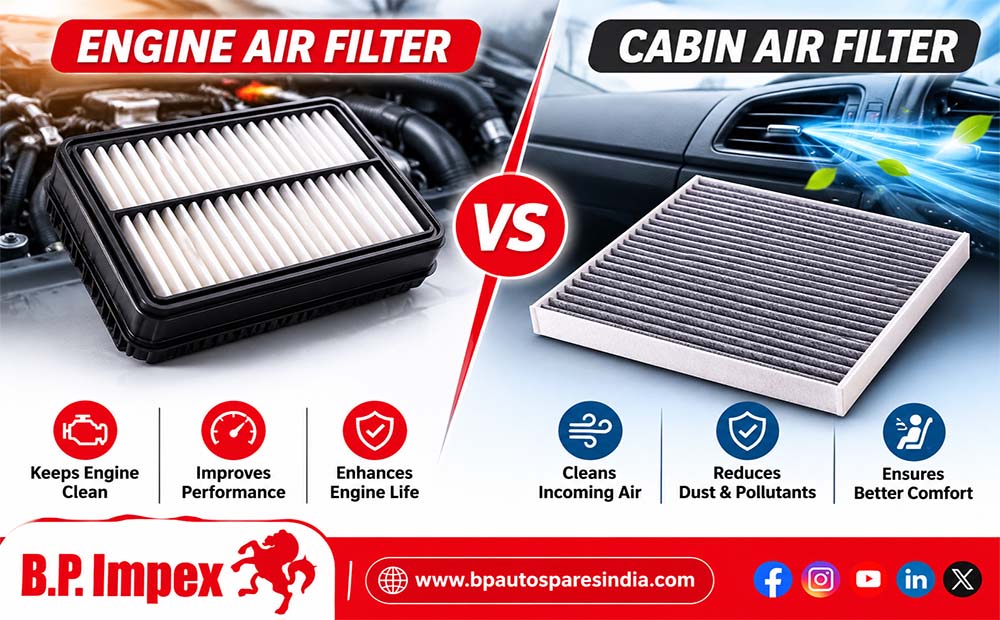
Engine vs Cabin Air Filter: Symptoms, Replacement Guide & Intervals You Shouldn’t Ignore
Understanding the exact differences in an Engine vs Cabin Air Filter setup is essential for proper vehicle maintenance. When it comes to routine maintenance, engine oil, brakes, and tires usually steal all the spotlight. However, two small, affordable, yet critical components quietly keep your car running smoothly and your air clean: the engine air filter and the cabin air filter.
When it comes to routine vehicle maintenance, engine oil, brakes, and tires usually steal all the spotlight. However, two small, affordable, yet critical components quietly keep your car running smoothly and your air clean: the Engine Air Filter and the Cabin Air Filter.
Though both are made of pleated paper, synthetic fibers, or cotton mesh, they serve completely different purposes. One enables your engine to breathe clean oxygen for maximum performance, while the other ensures you and your passengers breathe dust-free, clean air inside the cabin. Ignoring either can lead to sluggish acceleration, poor fuel efficiency, weak air conditioning, or unpleasant odors inside your car.
In this comprehensive guide, we will break down what each filter does, the warning signs that indicate it is time for a replacement, step-by-step DIY installation instructions, and recommended replacement intervals to keep your vehicle in peak condition.
Part 1: The Engine Air Filter
What Does the Engine Air Filter Do?
To generate power, your engine burns a precise mixture of fuel and air. For every single gallon of gasoline burned, an internal combustion engine consumes nearly 10,000 gallons of air.
Located under the hood inside a sealed plastic box (the air cleaner assembly), the engine air filter traps dirt, dust, pollen, leaves, bugs, and road debris before they reach the engine cylinders. Without a functional filter, abrasive dirt particles act like sandpaper inside the engine, wearing down pistons, cylinder walls, and valves over time.
Key Symptoms of a Dirty or Clogged Engine Air Filter
When your engine air filter gets choked with dirt, the engine effectively suffocates. Look out for these common warning signs:
1. Engine Misfires and Rough Idling
Restricted airflow creates an overly “rich” air-fuel mixture (too much fuel, not enough air). Unburnt fuel can foul the spark plugs, causing the engine to shake, idle roughly, or misfire when sitting at a red light.
2. Loss of Power and Sluggish Acceleration
If you press the accelerator pedal and feel a delayed response or a lack of power while overtaking or climbing hills, a dirty filter is often to blame. Modern engine control units (ECUs) cut back throttle output to compensate for low airflow.
3. Reduced Fuel Economy
In older carbureted engines, a dirty air filter dramatically degrades fuel mileage. While modern fuel-injected vehicles adjust fuel delivery automatically, a restricted filter still forces the engine to work much harder, indirectly driving up fuel consumption.
4. Dark Smoke or Gasoline Smell from Exhaust
Insufficient oxygen prevents complete fuel combustion inside the cylinder. Unburnt fuel escapes into the exhaust system, resulting in black smoke at the tailpipe or a strong odor of gasoline around the car.
5. Check Engine Light On
Severely restricted airflow disrupts readings from the Mass Air Flow (MAF) sensor, triggering a diagnostic trouble code (DTC) and illuminating the Check Engine Light on your dashboard.
6. Visually Dirty Filter
A simple visual inspection tells the story. A new engine air filter is bright white or off-white. If it appears dark gray, black, or caked in debris, replacement is necessary.
Replacement Intervals for Engine Air Filters
- Standard Driving Conditions: Replace every 15,000 to 30,000 miles (or once every 1 to 2 years).
- Severe Driving Conditions: Replace every 10,000 to 15,000 miles. Severe conditions include unpaved gravel roads, dusty construction zones, frequent stop-and-go traffic, or arid desert climates.
Part 2: The Cabin Air Filter
What Does the Cabin Air Filter Do?
While the engine filter protects the car’s iron heart, the cabin air filter protects your lungs. Integrated into your vehicle’s Heating, Ventilation, and Air Conditioning (HVAC) system, it strains incoming outside air before it passes through your dashboard vents.
Usually located behind the glove box or beneath the dashboard, it captures airborne pollutants such as dust, pollen, mold spores, smog, soot, and fallen foliage. Advanced activated-carbon cabin filters can also neutralize unpleasant odors and harmful exhaust fumes.
Key Symptoms of a Clogged Cabin Air Filter
Because the cabin filter directly affects interior air quality and climate control performance, symptoms are easy to spot from the driver’s seat:
1. Weak Airflow from Vents
When the filter becomes saturated with dust and debris, it restricts airflow from the climate control fan. Even with the AC or heater fan turned to maximum, only a weak breeze may exit the vents.
2. Persistent Musty or Unpleasant Odors
Trapped moisture, organic debris, and dead insects create a breeding ground for mold and bacteria over time. This causes a stale, damp, or dirty-sock smell inside your car whenever the fan is turned on.
3. Increased HVAC Noise
Restricted airflow places extra pressure on the blower motor. You may hear a whistling noise or a loud hum coming from behind the dashboard when operating the AC or heater.
4. Fogged or Slow-Defogging Windows
A clogged cabin filter prevents the HVAC system from circulating fresh, dehumidified air effectively. Moisture accumulates on the inner windshield and side windows, making defogging dangerously slow during cold or wet weather.
5. Increased Allergies and Sneezing
If you or your passengers experience frequent sneezing, coughing, or watery eyes inside the car, your cabin filter is no longer successfully trapping pollen, dust mites, and allergens.
Replacement Intervals for Cabin Air Filters
- Standard Driving Conditions: Replace every 12,000 to 15,000 miles (or once a year, ideally before summer or spring).
- High-Pollution or Dusty Conditions: Replace every 5,000 to 10,000 miles (or twice a year in heavily polluted metropolitan areas or high-pollen environments).
Part 3: Step-by-Step DIY Replacement Guide
Replacing both filters is one of the easiest and most cost-effective maintenance tasks you can perform at home. It typically takes under 15 minutes and requires basic or no tools.
How to Replace Your Engine Air Filter
- Park Safely: Park your car on level ground, turn off the engine, and allow it to cool completely.
- Locate the Air Cleaner Box: Open the hood and locate the black plastic housing connected to a thick air intake tube.
- Open the Housing: Unfasten the metal clips or remove the Phillips-head screws holding the top cover of the air box in place.
- Remove the Old Filter: Lift the cover, slide out the dirty filter, and note its orientation (pleats facing down or up).
- Clean the Box: Use a clean rag or shop vacuum to clear away loose leaves, dust, or debris inside the bottom housing.
- Install the New Filter: Position the fresh filter snugly into the housing track, making sure the rubber seal sits flat around the edges.
- Secure the Housing: Reattach the air box lid and re-secure all clips or screws tightly.
How to Replace Your Cabin Air Filter
- Access the Glove Box: Empty all items from your glove compartment.
- Release the Stops: Locate the plastic stop arms on the sides of the glove box. Disconnect the small damper arm (if equipped) on the right side and gently press the outer sides of the glove box inward to lower it completely.
- Remove the Access Cover: Behind the lowered glove box, locate the narrow rectangular access door. Squeeze the side tabs to remove the cover.
- Remove the Old Filter: Pull the clogged filter straight out. Take note of the airflow arrow printed on the side frame (typically pointing downward).
- Insert the New Filter: Slide the new cabin air filter into place with its airflow arrow pointing in the exact same direction as the original.
- Reassemble: Reattach the access door, raise the glove box past its stop tabs, reconnect the damper arm, and replace your stored items.
Summary
Regularly inspecting and replacing your engine and cabin air filters is simple preventive maintenance that yields immediate results. A clean engine air filter maintains engine responsiveness and protects internal components, while a fresh cabin air filter ensures your climate control operates efficiently and protects your health. Check both filters during every oil change, and replace them promptly whenever signs of clogging appear.



Leave a Reply