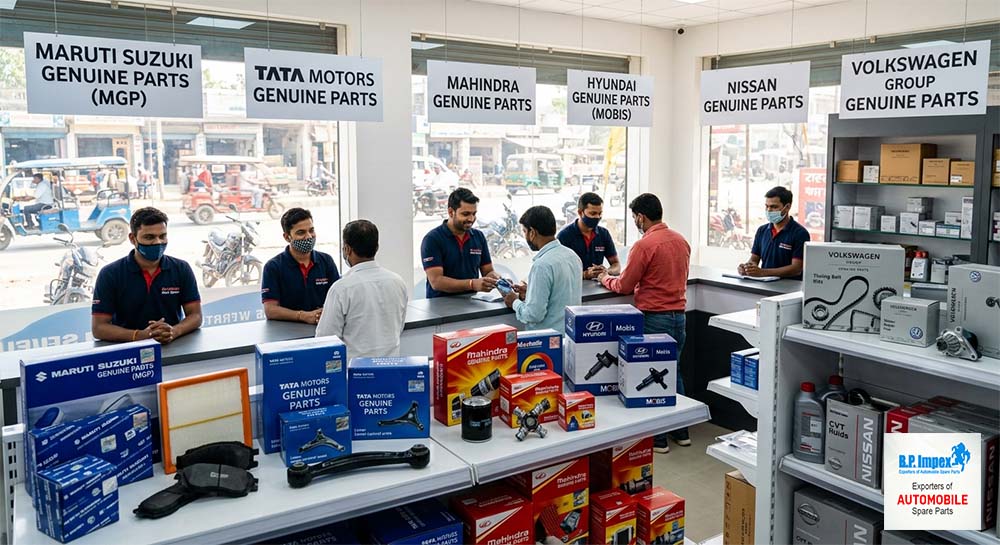
A vehicle is one of the most significant investments a person makes. Whether you drive a daily commuter hatchback or a rugged off-road SUV, regular wear and tear are inevitable. Over time, components degrade, performance drops, and replacement becomes non-negotiable. However, stepping into the auto replacement market can be overwhelming. With thousands of components available across physical stores and online platforms, picking the correct spare part requires knowledge, attention to detail, and brand-specific understanding.
Choosing the wrong spare part not only leads to wasted money but can also compromise passenger safety, void warranties, and cause irreversible damage to major mechanical assemblies like the engine or transmission. In this comprehensive guide, we break down everything you need to know about selecting the right replacement parts, along with detailed brand-by-brand insights for top automotive manufacturers including Maruti Suzuki, Tata Motors, Mahindra & Mahindra, Hyundai, Nissan, and Volkswagen.
1. Understanding the Core Categories of Auto Spare Parts
Before purchasing replacement items, it is essential to understand how spare parts are categorized in the automotive ecosystem. Auto parts are broadly divided into three main categories:
A. OEM Parts (Original Equipment Manufacturer)
OEM parts are built directly by the manufacturer or contracted third-party companies according to exact factory specifications. They are identical to the parts originally installed in your vehicle at the assembly line.
- Pros: Guaranteed compatibility, exact fit, consistent quality, and backed by official warranty.
- Cons: Priced higher than secondary market alternatives and usually available only through authorized dealerships or verified distributors.
B. OES Parts (Original Equipment Supplier)
OES components are built by companies that supply parts directly to car manufacturers (for example, Bosch, Denso, Valeo, or Brembo). While the part is structurally identical to the OEM component, it is sold under the supplier’s brand name rather than the car manufacturer’s logo.
- Pros: High quality, identical fitment to OEM, and available at a slightly lower price point.
- Cons: Packaging does not carry official automaker branding, requiring basic technical knowledge to verify fitment.
C. Aftermarket Parts
Aftermarket parts are manufactured by independent companies without direct involvement from automobile manufacturers. These parts are designed to function as direct replacements for original components.
- Pros: Highly affordable, widely available, and sometimes engineered to correct known factory design flaws.
- Cons: Wide variance in quality, risk of improper fitment, lack of standard warranty, and potential safety risks if unverified brands are chosen.
2. Essential Steps to Ensure Exact Compatibility
Selecting car parts is not as simple as matching a model name. Auto manufacturers frequently update part specifications midway through a vehicle generation. Follow these fundamental steps to ensure seamless fitment:
- Locate Your Vehicle Identification Number (VIN): The 17-digit VIN acts as your car’s unique fingerprint. It encodes precise details about engine specs, transmission variant, production year, and factory location. Cross-referencing part numbers with your VIN eliminates guessing games.
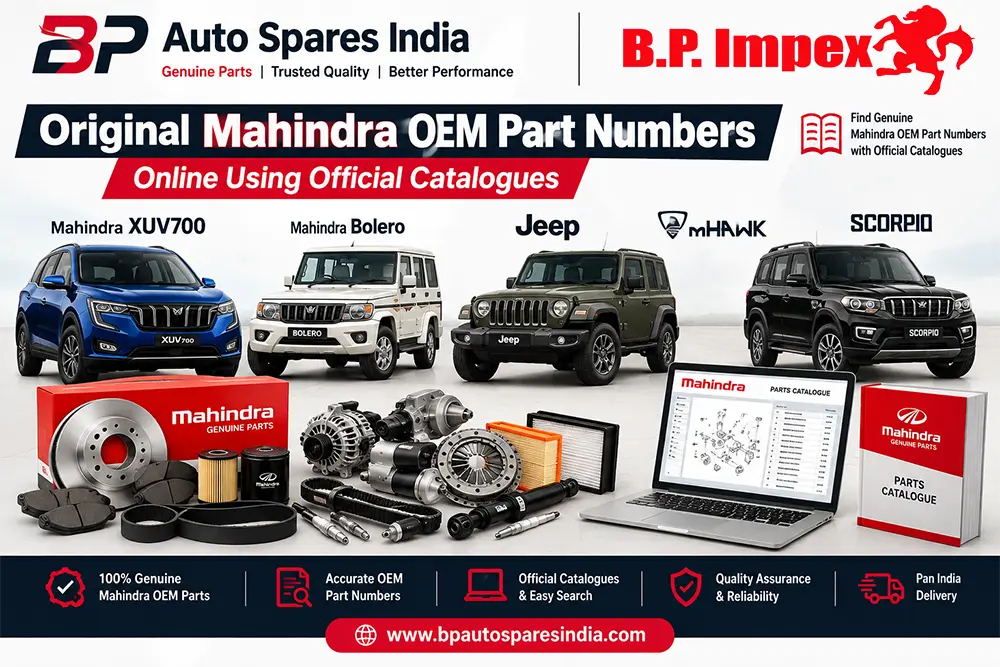
- Identify the Specific OEM Part Number: Every component features a unique alphanumeric code stamped onto its surface or printed on original packaging. Always match this code prior to ordering.
- Verify Engine and Transmission Codes: Many vehicle models share the same body structure across multiple engine options (e.g., Petrol vs. Diesel or Turbo vs. Naturally Aspirated). Ensure the component matches your exact engine trim.
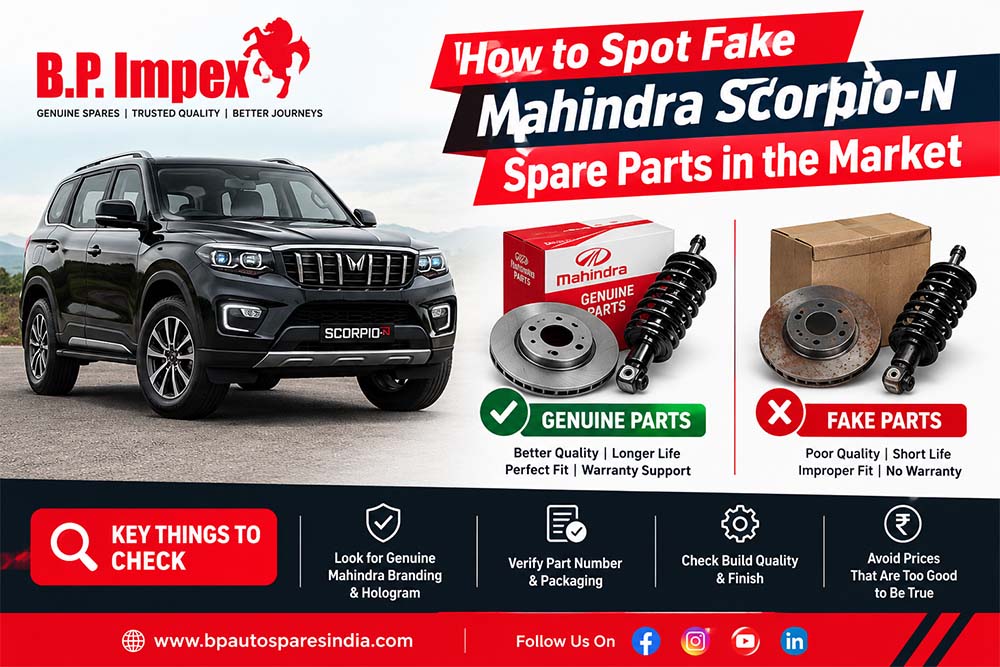
- Inspect Quality Marks and Holograms: Authentic spare parts feature tamper-evident holographic seals, QR verification codes, and sharp branding print. Avoid plain packaging with blurry lettering.
3. Brand-Specific Guide: Choosing Spare Parts for Top Automotive Brands
Different car manufacturers employ unique engineering philosophies, supply chains, and component sourcing standards. Here is what you need to consider when sourcing parts for major automotive brands.
A. Maruti Suzuki
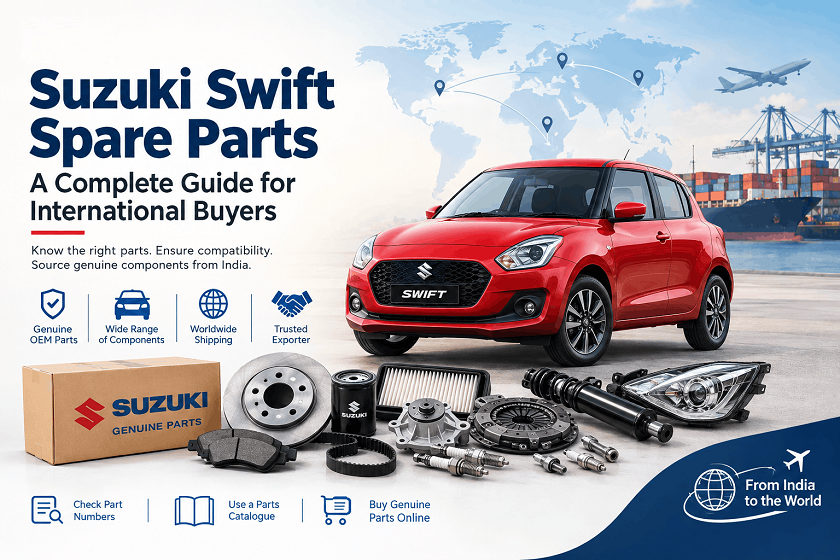
Maruti Suzuki dominates the market with an extensive service network and high parts availability. Most spare parts are categorized under MGP (Maruti Genuine Parts).
- Common Wear-and-Tear Parts: Clutch plates, brake pads, spark plugs, suspension bush kits, air filters, and drive belts.
- Key Selection Tip: Due to Suzuki’s widespread popularity, counterfeit MGP products are common. Always verify the blue and white MGP security hologram tag on the packaging. Ensure clutch sets and brake components match exact generation specs, as Maruti frequently updates friction materials for better fuel efficiency.
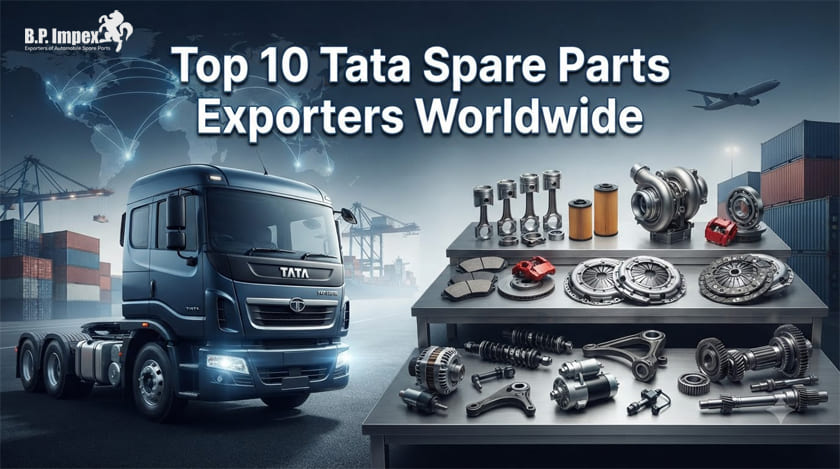
B. Tata Motors
Tata vehicles are known for robust structural builds and heavy-duty suspension designs. Replacement parts fall under the official Tata Green Shield / Tata Genuine Parts distribution line.
- Common Wear-and-Tear Parts: Lower suspension arms, shock absorbers, diesel fuel injectors, turbocharger hoses, brake discs, and clutch assemblies.
- Key Selection Tip: Tata’s modern passenger vehicles (like Nexon, Harrier, and Safari) utilize advanced electronic sensors and complex suspension layouts. When replacing components, avoid low-grade aftermarket suspension parts, as improper stiffness ratings can disrupt electronic stability programs (ESP) and ride dynamics.
C. Mahindra & Mahindra
Mahindra specializes in tough ladder-frame SUVs and utility vehicles, meaning components endure heavy mechanical load and thermal stress. Genuine items are distributed via Mahindra Maximile / Mahindra Genuine Parts.
- Common Wear-and-Tear Parts: Suspension ball joints, leaf springs, propeller shaft universal joints, clutch master cylinders, brake pads, and heavy-duty oil/fuel filters.
- Key Selection Tip: Due to high torque outputs in mHawk and mStallion engines, drivetrain and cooling components must adhere to precise thermal tolerances. Always use recommended OEM engine oils and fluid filters to prevent turbocharger wear and maintain engine longevity.
D. Hyundai
Hyundai vehicles rely on refined engineering with high integration of electronic sensors, creature comforts, and precise mechanical assemblies. Parts are marketed under Hyundai Genuine Parts (Mobis).
- Common Wear-and-Tear Parts: Steering rack assemblies, wheel bearings, ABS sensors, automatic transmission fluid filters, brake pads, and ignition coils.
- Key Selection Tip: Hyundai steering and electrical components rely heavily on recalibration upon installation. When sourcing Hyundai Mobis parts, ensure electronic control modules, steering angle sensors, and throttle bodies are verified factory-new units to avoid warning lights on the instrument cluster.
E. Nissan
Nissan utilizes global platform sharing (often co-developed with Renault). Finding parts requires paying close attention to cross-brand compatibility codes under Nissan Genuine Parts.
- Common Wear-and-Tear Parts: CVT transmission fluids and filters, engine mounts, brake rotors, oxygen sensors, and suspension struts.
- Key Selection Tip: Nissan vehicles equipped with XTRONIC CVT transmissions require strict adherence to specified fluid grades (such as Nissan NS-2 or NS-3). Using non-compliant transmission fluid or generic filters will cause premature CVT slip and catastrophic failure.
F. Volkswagen
Volkswagen vehicles feature high-precision German engineering with tight mechanical tolerances. Parts are distributed under the official Volkswagen Genuine Parts network.
- Common Wear-and-Tear Parts: Dual-clutch (DSG) flywheels, timing belt kits, water pumps, sensor clusters, dynamic brake discs, and synthetic oil filters.
- Key Selection Tip: Volkswagen components require exact spec matching. Avoid cheap aftermarket sensors or generic timing belts. German engines are sensitive to oil viscosity and cooling pressure; choosing substandard parts can lead to severe engine damage.
4. Quick Overview: Brand Sourcing & Spare Part Priority Table
| Automaker | Official Parts Brand | Critical Spare Parts to Monitor | Key Selection & Sourcing Advice |
| Maruti Suzuki | MGP (Maruti Genuine Parts) | Brake pads, clutch sets, suspension bushes | Check MGP holographic seal; match generation part codes. |
| Tata Motors | Tata Genuine Parts | Suspension arms, turbo hoses, clutch kits | Prioritize heavy-duty OEM parts to preserve ESP tuning. |
| Mahindra | Mahindra Genuine Parts / Maximile | Ball joints, U-joints, turbo oil filters | Ensure thermal rating compliance for high-torque mHawk engines. |
| Hyundai | Hyundai Mobis | ABS sensors, steering racks, ignition coils | Verify MOBIS security codes for precise electrical calibration. |
| Nissan | Nissan Genuine Parts | CVT fluids/filters, engine mounts, O2 sensors | Strictly stick to specified OEM CVT fluid grades (NS-2/NS-3). |
| Volkswagen | VW Group Genuine Parts | DSG flywheel, timing belt kits, water pump | Use strictly exact-fit OEM parts due to tight mechanical tolerances. |
5. Crucial Mistakes to Avoid When Buying Car Parts
- Prioritizing Price Over Safety: Critical safety systems (brakes, steering components, airbags, and tires) should never be compromised with low-quality, cheap aftermarket components.
- Ignoring Warranty Terms: Fitting unapproved aftermarket modifications or non-OEM electronic accessories can instantly void your vehicle’s factory warranty.
- Ignoring Return and Exchange Policies: Always purchase from suppliers that offer straightforward return windows, allowing you to return parts if fitment issues arise.
- Not Replacing Complementary Parts in Pairs: Components like shock absorbers, brake discs, headlight bulbs, and tires wear down evenly on both sides. Replacing only one side leads to unbalanced handling and accelerated wear on new components.
Conclusion: Protecting Your Investment with the Right Choice Choosing the right spare parts for your car is an essential responsibility for every car owner. By understanding the differences between OEM, OES, and aftermarket options—and paying close attention to manufacturer-specific needs across brands like Maruti Suzuki, Tata, Mahindra, Hyundai, Nissan, and Volkswagen—you ensure that your vehicle remains safe, efficient, and reliable for years to come. Always use your VIN number, cross-check part codes, buy from authorized channels, and prioritize quality over short-term savings.


Leave a Reply