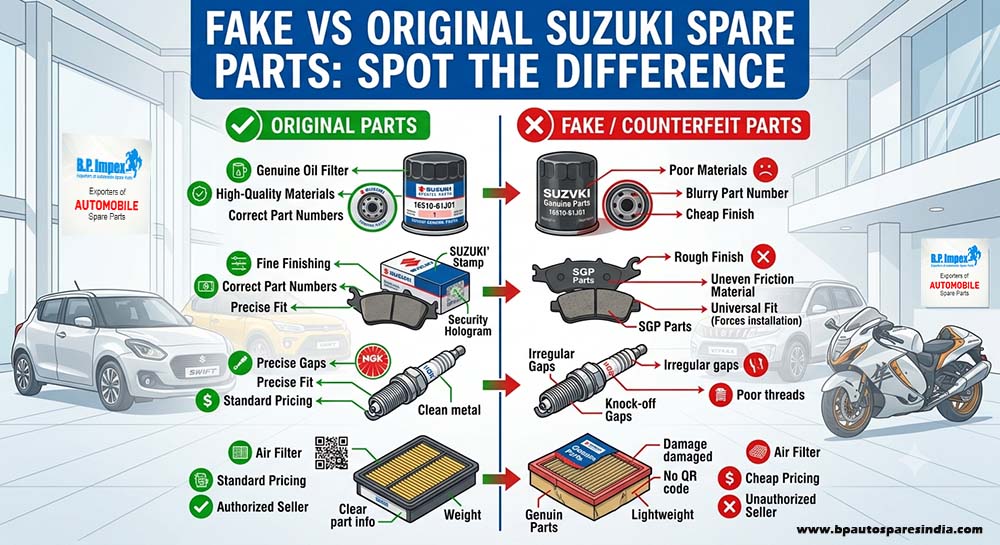
Finding reliable SUZUKI SPARE PARTS is critical to keeping your vehicle running smoothly, safely, and efficiently on the road. Whether you drive a swift hatchback, a rugged SUV, or ride a high-performance Suzuki motorcycle, the components you install under the hood dictate your machine’s lifespan.
Unfortunately, the automotive aftermarket is flooded with counterfeit components. Shanzhai or replica parts might look identical to the untrained eye, but they pose massive safety risks, compromise vehicle performance, and can lead to catastrophic engine failure.
As a vehicle owner, protecting yourself from counterfeiters requires a mix of awareness and technical know-how. In this comprehensive guide, we will break down the exact red flags you need to watch out for to ensure you are buying 100% genuine Suzuki components every single time.
Why Counterfeit Suzuki Spare Parts Pose a Major Threat
Before diving into the warning signs, it is important to understand why counterfeiters target Suzuki. Because Suzuki vehicles are globally acclaimed for their fuel efficiency, reliability, and massive market share, the demand for replacement components is perennially high. Criminal networks exploit this demand by manufacturing cheap, sub-standard replicas.
Using fake components isn’t just a matter of losing money; it directly threatens your safety.
- Brake Pads: Counterfeit brake pads often use compressed grass, sawdust, or inferior friction materials that melt under high temperatures, leading to total brake failure.
- Oil Filters: Fake oil filters lack proper filtration paper, allowing debris to recirculate into your engine, resulting in a seized engine block.
- Airbags: Counterfeit airbag modules may fail to deploy during an accident, or worse, deploy with too much force, spraying shrapnel into the cabin.
Investing in authentic suzuki spare parts online or offline protects your investment, preserves your vehicle’s warranty, and ensures peace of mind.
5 Red Flags to Watch Out For When Buying Suzuki Spare Parts
To stay safe from scammers, keep a sharp eye out for these five critical warning signs when shopping for your automotive replacements.
1. Unbelievably Low Prices
The old adage, “If it looks too good to be true, it probably is,” applies perfectly to the automotive components market. Genuine manufacturers maintain strict quality control, source high-grade raw materials, and invest heavily in crash testing. Consequently, authentic parts carry a standardized market value.
If a vendor offers you a critical engine component or body panel at a 50% or 70% discount compared to the official Suzuki authorized dealer price, alarm bells should ring immediately. Counterfeiters use low-grade alloys, recycled plastics, and cheap labor to undercut legitimate prices. While saving money on suzuki spare parts is tempting, a cheap fake will cost you thousands more in secondary repairs down the road.
2. Flaws in Packaging and Typo Mistakes
Official Suzuki packaging—whether it is Maruti Suzuki Genuine Parts (MGP) or Suzuki Genuine Parts (SGP)—follows strict corporate branding guidelines. Counterfeiters often slip up on the finer details of packaging.
When inspecting the box or wrap, look out for:
- Typos and Spelling Errors: Look closely at the text. Words like “Genuine,” “Suzuki,” or “Engine” are occasionally misspelled as “Genuin,” “Suzvki,” or “Engin” on counterfeit boxes.
- Faded Colors and Poor Graphics: Genuine boxes feature sharp, high-contrast printing. If the logos look blurry, off-center, or faded, it is likely a replica.
- Flimsy Materials: Authentic parts are shipped in sturdy, high-quality cardboard boxes or heavy-duty sealed plastic to prevent transit damage. Flimsy, easily crushed packaging is a major red flag.
3. Hologram Tampering and Missing QR Codes
Modern packaging for genuine suzuki spare parts features advanced security measures to help consumers verify authenticity instantly. Most authentic boxes come with a high-security holographic sticker that shifts colors or reveals hidden text when tilted under light.
How to Verify Security Labels:
[Genuine Label] –> Smooth edges, sharp color transition, scannable QR code
[Counterfeit] –> Peeling edges, static dull color, broken/unscannable QR code
If the hologram sticker looks like a cheap silver sticker, is peeling off, or lacks a unique serial number, you are dealing with a fake. Furthermore, modern genuine parts feature a secure QR code or barcode. You can scan these codes using your smartphone to instantly verify if the part number matches the item inside the box via the official Suzuki database.
4. Physical Imperfections on the Part Itself
Even if a counterfeiter manages to replicate the box perfectly, they rarely match the precision engineering of the actual component. Take the part out of its packaging and inspect it under good lighting.
- Weight Discrepancy: High-quality metals and plastics have weight. Fake components often feel unusually light, thin, or hollow because manufacturers skip out on dense, durable materials.
- Rough Edges and Poor Finishing: Check for uneven welding seams, ragged plastic edges, or misaligned bolt holes. Genuine factory parts are perfectly machined, smooth, and designed to fit your vehicle seamlessly.
- Incorrect Part Numbers: Every genuine item has its specific part number stamped, engraved, or printed clearly on its surface. Cross-reference this number with your vehicle’s workshop manual or an authorized online directory. If the number is missing or printed crookedly, reject it.
5. Unauthorized or Unauthorized Online Sellers
Where you buy your components matters just as much as what you buy. If you are purchasing components from flea markets, unverified third-party sellers on general e-commerce platforms, or unauthorized local scrap yards, the risk of buying fake products increases exponentially.
Reputable suppliers of suzuki spare parts online will always provide transparent tracking, clear return policies, and verifiable manufacturer invoices. If a seller refuses to provide a proper tax invoice or insists on cash-only transactions without paperwork, they are likely trying to wipe their hands clean of a counterfeit sale.
Comparing Genuine vs. Fake Components
| Feature | Genuine Suzuki Spare Parts | Counterfeit/Fake Parts |
| Material Quality | Certified high-grade alloys & polymers | Low-grade, recycled, or weak materials |
| Safety Testing | Extensively crash-tested and certified | Zero quality control or safety testing |
| Fitment | 100% perfect, exact factory fit | Misaligned holes, requires forcing into place |
| Warranty Cover | Covered by official manufacturer warranty | No warranty; voids vehicle’s existing warranty |
| Lifespan | Long-lasting, durable over years | Prone to premature wear and rapid failure |
How to Safeguard Your Purchase
The best way to avoid falling into the trap of counterfeit sellers is to adopt a proactive approach to your vehicle’s maintenance.
Buy from Authorized Distributors
Always prioritize buying your components directly from authorized dealerships, authorized service stations, or verified digital platforms specializing exclusively in genuine OEM (Original Equipment Manufacturer) components.
Request an Invoice with the Part Number
Whenever you buy a replacement component, ensure the seller prints the exact part number on the official receipt. This establishes a legal paper trail. If the part turns out to be defective or a verified counterfeit later on, you have the necessary documentation to demand a refund or report the vendor to consumer protection authorities.
Use Official Catalogs for Cross-Verification
Before heading out to shop, utilize online Suzuki parts catalogs. By entering your vehicle’s VIN (Vehicle Identification Number) or chassis number, you can pinpoint the exact part number you need. Knowing this information beforehand prevents sellers from passing off an incorrect or universal fake part as a specialized component for your specific model.
The Long-Term Financial Impact of Authentic Components
Many car and motorcycle owners turn to aftermarket replicas to save a quick buck. However, macro-economic automotive data consistently shows that installing fake parts costs significantly more over time.
A fake oil filter can leak, causing your engine oil pressure to drop, which eventually destroys the engine pistons. What started as an attempt to save $10 on a filter turns into a $3,000 engine rebuild. Furthermore, vehicles maintained with genuine suzuki spare parts retain a significantly higher resale value in the used car market, as savvy buyers look for a documented service history using authentic components.
Conclusion: Prioritize Safety Over Savings
Your vehicle is a complex machine that relies on every single nut, bolt, and filter working in perfect harmony. Compromising on the quality of your components puts your vehicle’s health and your passengers’ lives at risk. By keeping these 5 red flags in mind—unusual pricing, flawed packaging, missing security holograms, physical manufacturing imperfections, and sketchy vendors—you can successfully navigate the market and protect your vehicle from the dangers of counterfeit items. Always invest in genuine suzuki spare parts to ensure your ride remains safe, reliable, and performing at its peak for miles to come.





Leave a Reply