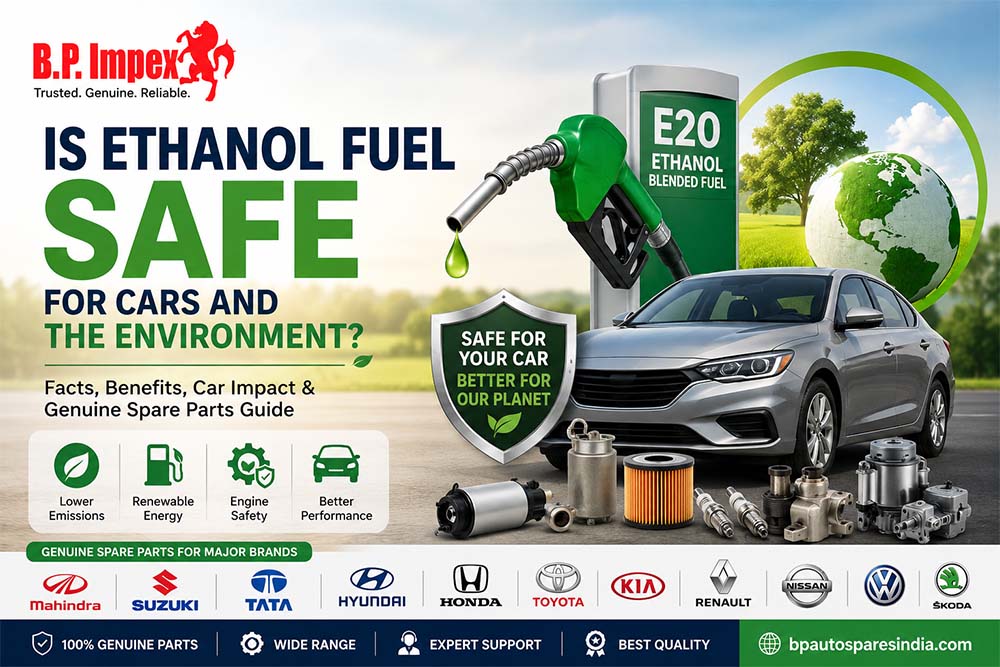
As fuel prices continue to fluctuate and environmental concerns grow, ethanol-blended petrol has become a common topic among Indian vehicle owners. The Indian government is actively promoting ethanol blending to reduce dependence on imported crude oil and lower carbon emissions. While this shift brings several environmental benefits, many car owners have one important question:
Is ethanol fuel safe for cars and the environment?
The answer is yes—but with certain considerations. Modern vehicles are designed to work efficiently with recommended ethanol blends, while older vehicles may require additional care. Understanding how ethanol affects your engine, fuel system, and spare parts can help you make informed decisions and avoid unnecessary repairs.
In this guide, we’ll explain how ethanol fuel works, its benefits and drawbacks, its impact on popular Indian car brands like Mahindra, Maruti Suzuki, Tata Motors, Hyundai, Honda, Toyota, Kia, Renault, Nissan, and others, and why using genuine spare parts becomes even more important in the age of ethanol-blended fuel.
What Is Ethanol Fuel?
Ethanol is a renewable alcohol-based fuel produced from crops such as sugarcane, corn, and agricultural biomass. Instead of replacing petrol completely, it is blended with petrol in different proportions.
The most common fuel blends include:
- E10 – 10% ethanol and 90% petrol
- E20 – 20% ethanol and 80% petrol
- E85 – 85% ethanol, primarily for flex-fuel vehicles
India has already introduced E20 fuel in many regions as part of its long-term clean energy strategy.
Is Ethanol Fuel Safe for Cars?
For most modern petrol cars, yes.
Manufacturers such as Maruti Suzuki, Tata Motors, Mahindra, Hyundai, Honda, Toyota, Kia, Volkswagen, Skoda, Renault, and Nissan have gradually updated their petrol engines to support E20-compatible fuel.
If your vehicle is E20-compatible and maintained according to the manufacturer’s recommendations, ethanol-blended petrol generally does not pose any major safety risks.
However, compatibility depends on:
- Vehicle model year
- Fuel system design
- Engine calibration
- Quality of maintenance
- Condition of fuel system components
Older vehicles manufactured before ethanol compatibility became common may experience faster wear of certain fuel system components.
How Ethanol Affects Car Engines
Ethanol has several properties that differ from conventional petrol.
1. It Absorbs Moisture
Ethanol naturally attracts water from the atmosphere. Excess moisture can lead to corrosion inside fuel tanks, fuel lines, and injectors if a vehicle remains unused for long periods.
This is why regular driving and proper maintenance become more important with ethanol-blended fuel.
2. It Acts as a Cleaning Agent
One positive aspect of ethanol is that it helps clean deposits from the fuel system. However, in older vehicles, these deposits may loosen and clog fuel filters during the initial transition.
Replacing the fuel filter when necessary helps maintain smooth performance.
3. Slightly Lower Fuel Economy
Ethanol contains less energy than petrol.
As a result, some drivers may notice a small reduction in mileage when using higher ethanol blends such as E20. The difference is generally minor in modern engines designed for ethanol compatibility.
Is Ethanol Fuel Safe for the Environment?
One of the biggest reasons governments encourage ethanol blending is its environmental advantage.
Some key benefits include:
- Lower greenhouse gas emissions
- Reduced dependence on fossil fuels
- Renewable production from agricultural resources
- Better combustion with fewer harmful pollutants
- Support for domestic agriculture and rural industries
Although ethanol production also requires land, water, and energy, it generally offers environmental advantages when compared with conventional fossil fuels.
Can Ethanol Damage Car Spare Parts?
This is where many vehicle owners become concerned.
The reality is that ethanol itself does not damage a properly designed fuel system. Problems usually arise when worn-out, poor-quality, or incompatible spare parts are used.
The components most likely to be affected include:
Fuel Pump
The fuel pump works continuously in contact with ethanol-blended fuel.
Low-quality aftermarket pumps may wear faster or fail earlier, while genuine components are designed to handle recommended fuel blends.
Fuel Injectors
Clean injectors ensure proper fuel spray.
Dirty or poor-quality injectors can affect fuel efficiency, engine performance, and emissions.
Fuel Filter
Since ethanol cleans deposits inside the fuel system, the fuel filter may collect more contaminants during the early stages of ethanol use.
Replacing the filter at recommended intervals is essential.
Rubber Hoses and Seals
Older rubber materials may deteriorate faster when exposed to ethanol over time.
Modern genuine components are manufactured using ethanol-resistant materials.
Fuel Tank Components
Fuel tank caps, seals, and internal fittings should always be replaced with manufacturer-approved parts whenever required.
Impact on Popular Indian Car Brands
Mahindra
Modern Mahindra petrol SUVs are designed with improved fuel systems that support recommended ethanol blends. Maintaining genuine fuel pumps, injectors, filters, and seals ensures reliable performance. Buy Mahindra Spare Parts
Maruti Suzuki
Maruti Suzuki has updated many of its latest petrol models to support E20 fuel. Regular servicing and genuine replacement parts help maintain engine efficiency and fuel economy. Buy Suzuki Spare Parts
Tata Motors
Tata’s newer petrol engines are engineered for future fuel standards. Genuine fuel system components play an important role in preventing premature wear. Buy Tata Spare Parts
Hyundai
Hyundai vehicles benefit from periodic fuel system inspections, especially if driven in dusty or humid environments. Buy Hyundai Spare Parts
Honda
Honda petrol engines are known for reliability, but maintaining original fuel filters and injectors remains essential for smooth operation.
Toyota
Toyota recommends following service schedules and using approved replacement parts to ensure long-term fuel system durability.
Kia, Renault, Nissan, Volkswagen and Skoda
These manufacturers have also upgraded newer petrol models for ethanol compatibility. High-quality maintenance remains the key to long engine life.
Why Genuine Spare Parts Matter Even More
As ethanol-blended fuel becomes more common, the quality of replacement parts becomes increasingly important.
Using genuine spare parts offers several advantages:
- Better compatibility with ethanol fuel
- Longer service life
- Improved fuel efficiency
- Better engine performance
- Reduced risk of leakage
- Enhanced safety
- Manufacturer-quality standards
- Reliable fit and finish
Cheap counterfeit components may appear similar but often use lower-quality materials that deteriorate more quickly.
Where Can You Buy Genuine Car Spare Parts?
Finding authentic spare parts is just as important as choosing the right fuel.
Whether you own a Mahindra SUV, Maruti Suzuki hatchback, Tata sedan, Hyundai, Honda, Toyota, Kia, Renault, Nissan, Volkswagen, or Skoda, always purchase spare parts from trusted suppliers.
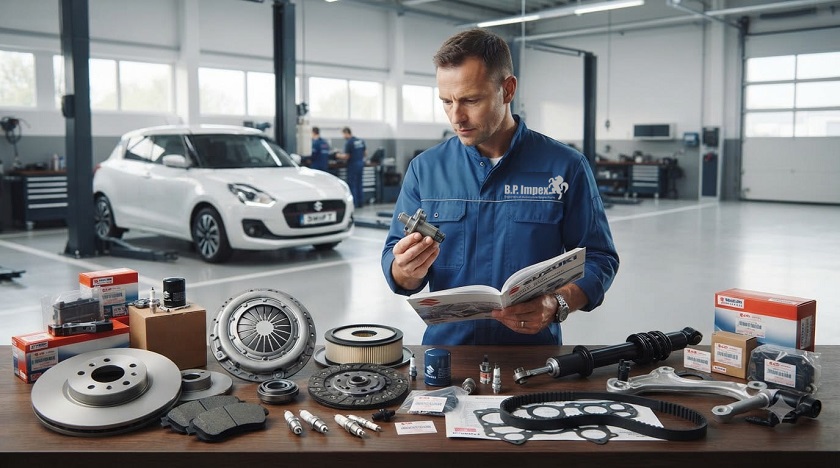
BP Auto Spares India offers a wide range of genuine and high-quality replacement parts for leading automobile brands in India.
Customers can find:
- Engine parts
- Fuel pumps
- Fuel injectors
- Fuel filters
- Air filters
- Brake components
- Suspension parts
- Clutch parts
- Steering components
- Electrical parts
- Cooling system components
- Body parts
- Service kits
- OEM-quality replacement parts
Choosing a trusted supplier helps reduce the risk of counterfeit products while ensuring your vehicle performs as intended.
Tips for Using Ethanol-Blended Fuel Safely
You don’t need to make major changes to your driving habits. A few simple maintenance practices can make a significant difference.
- Use fuel recommended by your vehicle manufacturer.
- Avoid storing fuel for extended periods.
- Drive your vehicle regularly.
- Replace fuel filters on schedule.
- Inspect fuel hoses during servicing.
- Fix fuel leaks immediately.
- Use only genuine replacement parts.
- Follow the manufacturer’s maintenance intervals.
These practices help extend the life of your fuel system and improve long-term reliability.
Common Myths About Ethanol Fuel
Myth 1: Ethanol ruins every engine.
Fact: Most modern petrol cars are designed to use recommended ethanol blends safely.
Myth 2: Ethanol immediately damages fuel pumps.
Fact: Genuine fuel pumps are engineered to operate with approved ethanol blends.
Myth 3: Mileage drops drastically.
Fact: Some reduction in fuel economy may occur with higher ethanol blends, but it is generally small in compatible vehicles.
Myth 4: Every old car will fail with ethanol.
Fact: Older vehicles may require additional maintenance, but many continue to operate reliably with proper care.
Final Thoughts
Ethanol-blended fuel is becoming an integral part of India’s automotive future. For most modern petrol vehicles, it is a safe and practical fuel that supports cleaner emissions and reduces dependence on imported fossil fuels. While ethanol has different properties than conventional petrol, its impact on your vehicle largely depends on proper maintenance and the quality of the components installed.
Frequently Asked Questions
Is E20 fuel safe for Indian cars?
Most newer petrol vehicles launched in recent years are designed or updated to support E20 fuel. Always refer to your owner’s manual for confirmation.
Does ethanol fuel reduce engine life?
Not when the vehicle is compatible and maintained properly with quality fuel and genuine spare parts.
Can ethanol damage fuel injectors?
Healthy, manufacturer-approved injectors are designed to handle recommended ethanol blends. Problems are more likely with worn or poor-quality components.
Should I replace spare parts more often?
Not necessarily. Following the manufacturer’s maintenance schedule and using genuine replacement parts is usually sufficient.
Where should I buy genuine car spare parts?
Always buy from authorized dealers or trusted suppliers like BP Auto Spares India, which offers genuine and OEM-quality spare parts for Mahindra, Maruti Suzuki, Tata Motors, Hyundai, Honda, Toyota, Kia, Renault, Nissan, Volkswagen, Skoda, and other leading brands.



Leave a Reply