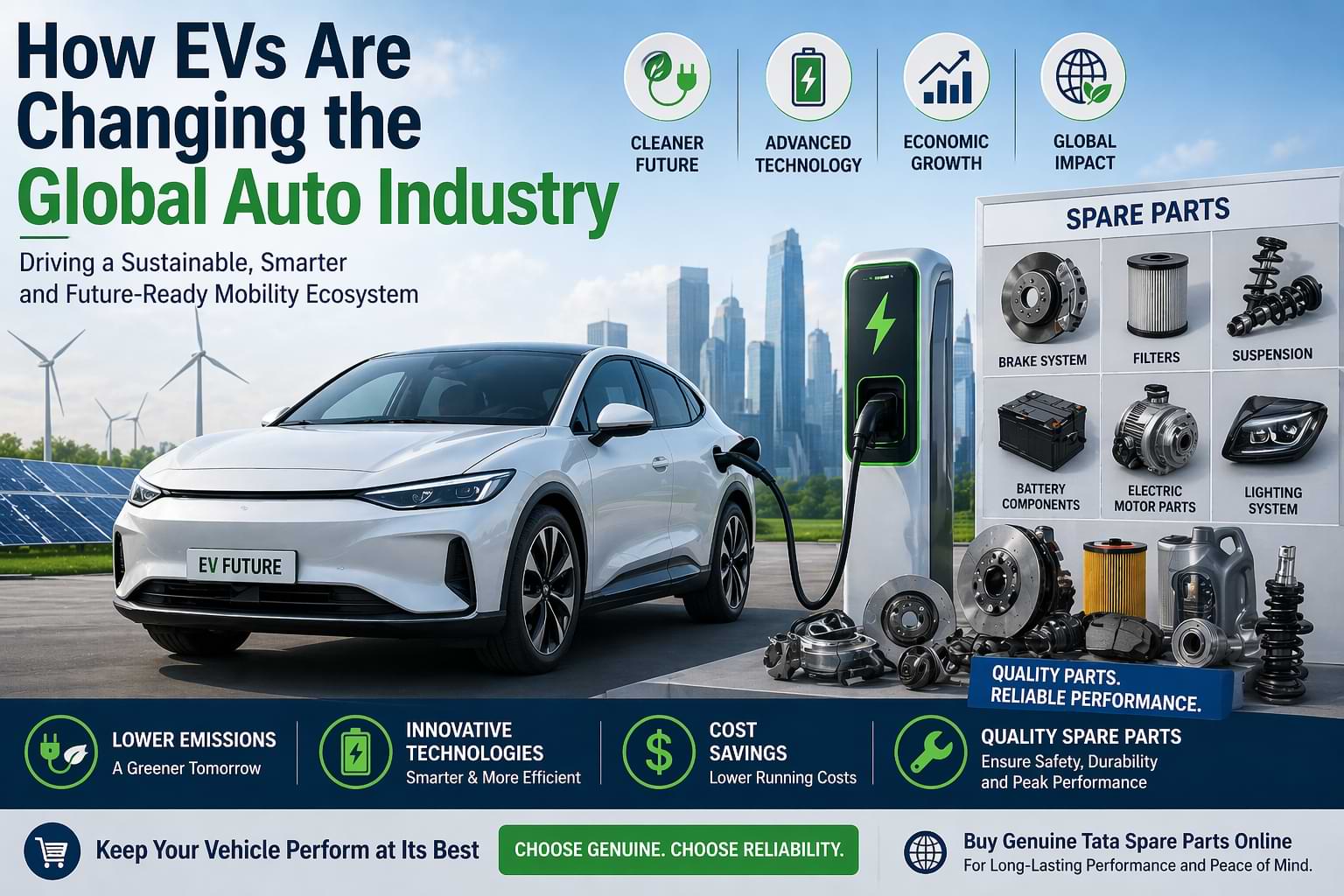
The global automotive industry is undergoing one of the most transformative shifts in its history. Electric Vehicles (EVs), once considered niche and futuristic, have now entered the mainstream, fundamentally altering how vehicles are designed, manufactured, sold, and maintained. Governments, manufacturers, and consumers alike are aligning toward a cleaner, more sustainable mobility ecosystem.
This transition is not just about replacing internal combustion engines (ICE) with electric motors—it is reshaping the entire value chain of the auto industry, from supply chains and infrastructure to consumer behavior and aftermarket services.
The Rise of Electric Vehicles
Over the past decade, EV adoption has accelerated rapidly due to advancements in battery technology, supportive government policies, and growing environmental awareness. Countries across the globe are setting ambitious targets to phase out fossil fuel-powered vehicles, pushing automakers to rethink their strategies.
Major automotive manufacturers are investing billions into EV development. From compact electric cars to heavy-duty electric trucks, the diversity of EV offerings is expanding at an unprecedented rate. This shift is also encouraging new entrants into the market, increasing competition and innovation.
Environmental Impact and Sustainability
One of the primary drivers behind the EV revolution is the need to reduce carbon emissions. Traditional vehicles powered by petrol and diesel contribute significantly to air pollution and climate change. EVs, on the other hand, produce zero tailpipe emissions, making them a cleaner alternative.
Additionally, advancements in renewable energy are further enhancing the sustainability of EVs. Charging vehicles using solar or wind energy significantly reduces the overall carbon footprint, making the transportation sector more eco-friendly.
However, challenges such as battery recycling and resource extraction (like lithium and cobalt) still need to be addressed to ensure long-term sustainability. Source: Buy Tata Spare Parts Online from a Trusted Exporter
Technological Advancements in EVs
Electric vehicles are not just about clean energy—they are also at the forefront of technological innovation. Some of the key advancements include:
1. Battery Technology
Modern EVs are powered by lithium-ion batteries that offer improved energy density, longer lifespan, and faster charging capabilities. Research into solid-state batteries promises even greater efficiency and safety.
2. Autonomous Driving Integration
Many EVs are being designed with advanced driver-assistance systems (ADAS) and autonomous driving capabilities. These features enhance safety and improve the overall driving experience.
3. Connected Car Ecosystems
EVs are increasingly integrated with digital ecosystems, allowing real-time monitoring, remote diagnostics, and software updates over the air (OTA).
Impact on Automotive Manufacturing
The shift to EVs is significantly altering manufacturing processes. Electric vehicles have fewer moving parts compared to traditional vehicles, which simplifies assembly but requires new expertise in electronics and battery systems.
Supply Chain Transformation
The demand for components like batteries, electric motors, and semiconductors is increasing, while the need for traditional engine parts is declining. This is forcing suppliers to adapt or risk becoming obsolete.
Workforce Evolution
Automotive companies are investing in reskilling their workforce to meet the demands of EV production. Engineers and technicians now need expertise in software, electronics, and energy systems.
Changing Consumer Behavior
Consumers are becoming more environmentally conscious and are increasingly opting for EVs due to their lower operating costs and government incentives. Features like instant torque, quiet operation, and lower maintenance requirements are also appealing.
Moreover, the total cost of ownership (TCO) for EVs is becoming competitive with traditional vehicles, especially with rising fuel prices and improved battery efficiency.
Charging Infrastructure Development
One of the biggest challenges for EV adoption has been the availability of charging infrastructure. However, this is rapidly improving as governments and private companies invest heavily in building charging networks.
Types of Charging Stations
- Home Charging: Convenient and cost-effective for daily use
- Public Charging Stations: Located in urban areas and highways
- Fast Charging Networks: Enable quick charging during long trips
The expansion of charging infrastructure is playing a crucial role in reducing range anxiety and encouraging more consumers to switch to EVs.
Impact on the Aftermarket Industry
The rise of EVs is also transforming the automotive aftermarket sector. Since EVs have fewer mechanical components, the demand for traditional spare parts like engine components, oil filters, and exhaust systems is declining.
However, new opportunities are emerging in areas such as battery maintenance, software updates, and electronic components.
For businesses dealing in automotive components, adaptation is essential. While traditional segments such as Tata Truck Parts still play a significant role in the current market, companies must gradually diversify into EV-related components to stay competitive.
Digital Transformation in the Auto Industry
The EV revolution is closely linked with digital transformation. Automakers are increasingly adopting data-driven approaches to improve vehicle performance, enhance customer experience, and streamline operations.
Key Digital Trends
- Artificial Intelligence (AI) for predictive maintenance
- Big Data Analytics for performance optimization
- Cloud Computing for connected vehicle services
This digital integration is enabling smarter, safer, and more efficient mobility solutions.
Government Policies and Incentives
Governments worldwide are playing a crucial role in promoting EV adoption through incentives, subsidies, and regulations. These include:
- Tax benefits for EV buyers
- Subsidies on vehicle purchases
- Investments in charging infrastructure
- Strict emission norms
Such initiatives are accelerating the transition toward electric mobility and encouraging manufacturers to expand their EV portfolios.
Challenges Facing the EV Industry
Despite its rapid growth, the EV industry faces several challenges:
1. High Initial Costs
Although prices are decreasing, EVs still have a higher upfront cost compared to traditional vehicles.
2. Battery Limitations
Issues related to battery lifespan, charging time, and recycling need further improvement.
3. Infrastructure Gaps
Charging infrastructure is still insufficient in many regions, particularly in developing countries.
4. Supply Chain Constraints
Dependence on rare earth materials poses risks to the stability of the supply chain.
Opportunities for Businesses
The transition to EVs presents numerous opportunities for businesses across the automotive ecosystem:
- Manufacturers can innovate with new EV models
- Suppliers can develop advanced components
- Service Providers can offer EV maintenance solutions
- Exporters can tap into global demand for EV parts
For example, businesses offering services like Buy Genuine Tata Spare Parts Online can expand their portfolios to include EV-compatible components and digital platforms for seamless customer experience.
The Future of the Auto Industry
The future of the auto industry is undoubtedly electric. As technology continues to evolve and infrastructure improves, EVs are expected to dominate the market in the coming decades.
Key Trends to Watch
- Growth of autonomous EVs
- Integration with smart cities
- Expansion of shared mobility services
- Advancements in battery technology
The convergence of electrification, automation, and connectivity will redefine mobility, making it more sustainable, efficient, and accessible.
Conclusion
Electric vehicles are not just a trend—they represent a paradigm shift in the global auto industry. From reducing environmental impact to driving technological innovation, EVs are reshaping every aspect of the automotive ecosystem.
While challenges remain, the opportunities far outweigh the obstacles. Businesses, manufacturers, and consumers who embrace this transformation will be better positioned to thrive in the evolving landscape.
As the world moves toward a cleaner and smarter future, the role of EVs will only continue to grow, making them a cornerstone of the next generation of mobility.







Leave a Reply