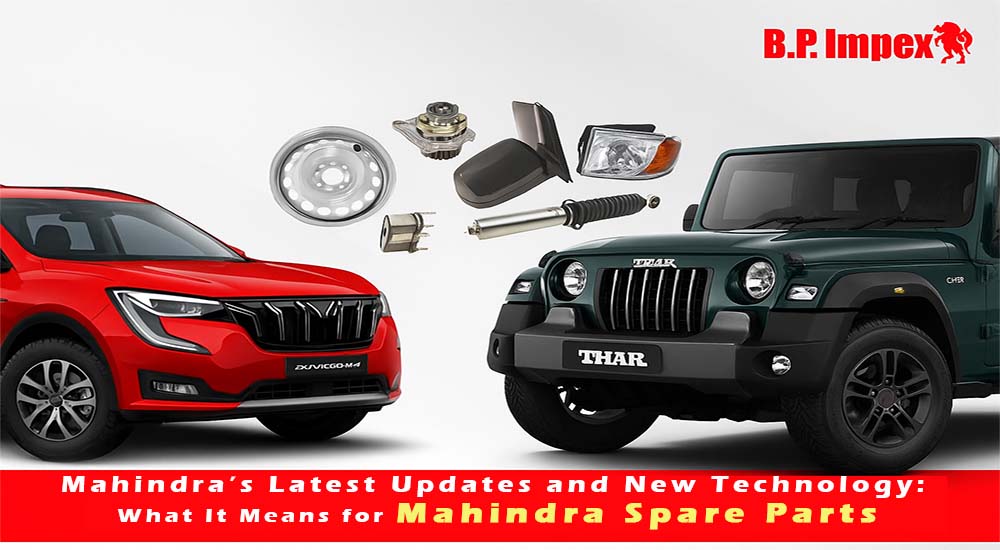
Mahindra’s Latest Updates and New Technology in 2025
Mahindra has been making significant strides in recent times. For example:
- Mahindra’s EVs like the Mahindra XEV 9e and Mahindra BE 6 have crossed dispatch milestones, reflecting growing momentum in their electric line-up.
- The company is working on a new modular platform that will serve ICE, hybrid and EV vehicles alike.
- They’ve confirmed new models in the pipeline (for example the upcoming Mahindra XEV 7e 7-seater electric SUV) targeted for launch in early 2026.
- On the more mainstream side, vehicles such as the Mahindra Thar (facelift) and updated versions of the Mahindra Bolero Neo are being readied, showing that Mahindra is refreshing both premium/EV offerings and conventional SUVs.
These developments matter a lot for owners, service providers and also those interested in Mahindra spare parts — because new platforms, new powertrains and new technologies impact what parts are used, how they’re serviced, and how widely available “regular” spare parts will be.
What’s New in Mahindra Vehicle Technology
Let’s delve deeper into the key technology aspects and how they affect the spare-parts ecosystem.
1. A Dedicated EV Platform (“Born Electric” initiative)
Mahindra has developed its INGLO platform for its new generation of electric SUVs. For example, the XEV 9e is built on this platform.
What that means:
- High-voltage battery systems, unique EV motors, power electronics — these parts differ significantly from ICE parts.
- Owners will need to be aware of battery modules, cooling systems for batteries, high-power cabling, etc.
- Spare parts for EVs are generally more specialized; not all traditional service centres may be fully equipped initially.
2. Modular Platform for ICE/Hybrid/EV
Mahindra’s new platform strategy implies that going forward many vehicles will share structural architecture, but differentiate by powertrain (ICE vs hybrid vs EV).
Implications:
- Some parts (chassis, body panels, interior trims) may become more common across variants — this may help spare-parts availability and cost.
- But parts specific to the powertrain (hybrid system modules, EV motors, battery pack components) will still need dedicated inventories.
- For those owning ICE-vehicles today, this means older parts may gradually become less standard; sometimes, newer model changes may render older parts obsolete or shared less widely.
3. Updated Features & Connectivity
New Mahindra vehicles are being equipped with advanced features: e.g., large infotainment screens, wireless smartphone integration, advanced driver-assistance systems (ADAS) and improved fuel compatibility. For example, Mahindra has officially advised that its petrol-powered SUVs are safe to run on E20 fuel (20% ethanol blend) though with some performance caveats.
Spare-parts impact:
- Interior electronic modules, sensors, camera or radar units (for ADAS) are more delicate, specialised and often costlier than traditional mechanical parts.
- Fuel system components may need to be designed or replaced differently to be compatible with ethanol-blended fuel (rubber gaskets, seals, etc). Though Mahindra has assured compatibility, it still means parts supply for relevant generations must account for ethanol fuel use.
4. Facelift and Variant Updates
Even within ICE vehicles, Mahindra is making cost-saving and feature-updating changes. For example, the Thar update included changes to trims and wheels.
And the Bolero Neo update will bring feature upgrades (infotainment, wireless Android/Apple connectivity) and design tweaks.
Spare-parts relevance:
- If a vehicle receives a facelift, some body panels, trims, interior parts and even wheel designs may change — meaning older spare parts may not fit the new version.
- Service providers and owners must check whether “same model” still uses “same part number” for a given item.
- For stockists and spare-parts retailers, it means keeping track of variant-specific parts (older vs facelift vs new platform) becomes important.
Why the Mahindra Spare Parts Matters
When we talk about “Mahindra spare parts”, this encompasses everything from mechanical, engine, transmission parts, suspension and braking components, to body panels, interior trims, electronics modules, batteries (for EVs), and so on. With Mahindra evolving its vehicle range and technology, the spare-parts ecosystem must keep pace. Here’s why owners, buyers and service professionals should give special attention:
- Fitment & Compatibility: With new platforms and facelifts, a spare part from an older generation may not fit a newer variant. For example, if Mahindra changes the infotainment unit size or design, then the bezel, wiring harness, mounting-bracket may differ.
- Availability & Lead Time: Some parts (especially EV-specific or newly updated items) may have longer lead times and potentially higher cost due to lower volumes initially.
- Cost Management: As Mahindra upgrades features, some parts become more premium (for instance, ADAS sensors, battery modules). Service costs and spare-parts cost for these may be higher. On the flip side, common mechanical parts (brakes, suspension, filters) may benefit from platform commonality and economies of scale — hence may be more affordable.
- Resale & Maintenance Value: If you own a Mahindra vehicle and plan to keep it long-term, ensuring access to genuine spare parts is crucial. If the model moves to a new platform and old parts are phased out, maintenance costs could rise. Therefore, tracking parts inventory, service manuals, and compatibility becomes wise.
- Aftermarket & Genuine Parts: Mahindra’s shift to EV and modular platforms may change how aftermarket parts are designed. Genuine parts will carry the assurance of fit, performance and warranty compliance. For owners concerned about long-term reliability and resale, opting for genuine parts labelled “Mahindra spare parts” might be the safer route.
Practical Advice for Mahindra Vehicle Owners & Spare-Parts Buyers
Here are some actionable tips focusing on Mahindra vehicles and the spare-parts dimension:
- Always check model year and variant: Because Mahindra is updating models, ensure the spare part you buy corresponds exactly to the variant (engine size, platform generation, facelift vs earlier).
- Use genuine parts when possible: Especially for critical systems (brakes, steering, battery for EVs). Genuine Mahindra spare parts will help maintain warranty, resale value and performance.
- Understand EV vs ICE differences: If you own a Mahindra EV (XEV 9e, BE 6, upcoming XEV 7e) you will need to deal with part types (battery modules, motor controllers) that are not present in ICE vehicles. Spare-parts sellers must stock those or refer you appropriately.
- Stay updated with manufacturer advisories: For example, Mahindra’s statement on E20 fuel compatibility. Such advisories may call for spare-parts or maintenance checks (rubber hoses/seals) even if you are running an older petrol vehicle.
- Service history matters: As vehicles get more electronics and modules, documenting service and part replacements helps. In future, when you trade-in or resell, buyers will check if genuine Mahindra spare parts were used.
- Stock up on common mechanical spares: For long-term owners, items like filters, brake pads, suspension bushes tend to be easier to source and reasonably priced. Having a trusted dealer/retailer for “Mahindra spare parts” is beneficial.
- Ask about future compatibility: If you’re buying a new Mahindra vehicle soon (especially one built on the new modular or EV platform), ask if parts will be available for the next 5-10 years and what the supply chain is like.
Looking Ahead: What to Expect from Mahindra & Its Spare-Parts Landscape
- With Mahindra planning a broad roll-out of EVs (e.g., XEV 7e 7-seater electric SUV) and upgrades to ICE/Hybrid platforms, the spare-parts range will expand and diversify.
- As platform commonality increases (modular platforms), we may see more shared parts across models, which could drive down cost and improve availability for some categories.
- For “Mahindra spare parts”, we may see new categories like battery cooling modules, EV high-voltage cables, power electronics modules becoming more mainstream.
- The aftermarket ecosystem (independent service providers, third-party spare-parts sellers) will likely adapt to Mahindra’s changing technology — owners should choose providers familiar with the new tech.
- Owners of legacy Mahindra models (older ICE vehicles) should take note: some parts may gradually become less common if newer platforms dominate later; so maintaining good condition and servicing can help mitigate cost escalation.
Conclusion
The brand keyword “Mahindra spare parts” really comes alive in light of Mahindra’s evolving vehicle portfolio and technology. Whether you own a conventional ICE Mahindra SUV today, or are considering one of the newer EVs or hybrids, spare-parts availability, compatibility, cost and service ecosystem are essential to the ownership experience.
Mahindra’s push into EVs, its new architecture, and updated features mean that the spare-parts landscape is changing. Owners, service centres and spare-parts suppliers all need to stay informed. From genuine mechanical parts to cutting-edge EV modules, the breadth of Mahindra spare parts is widening. For you as an owner or buyer, this means: check compatibility, use genuine parts where possible, plan for longer-term maintenance, and keep your vehicle’s service history clean.
If you like, I can also list common Mahindra spare parts (with part-numbers, approximate cost, reliability tips) for specific models (e.g., Thar, Bolero, XUV) — would you like me to do that?



Leave a Reply