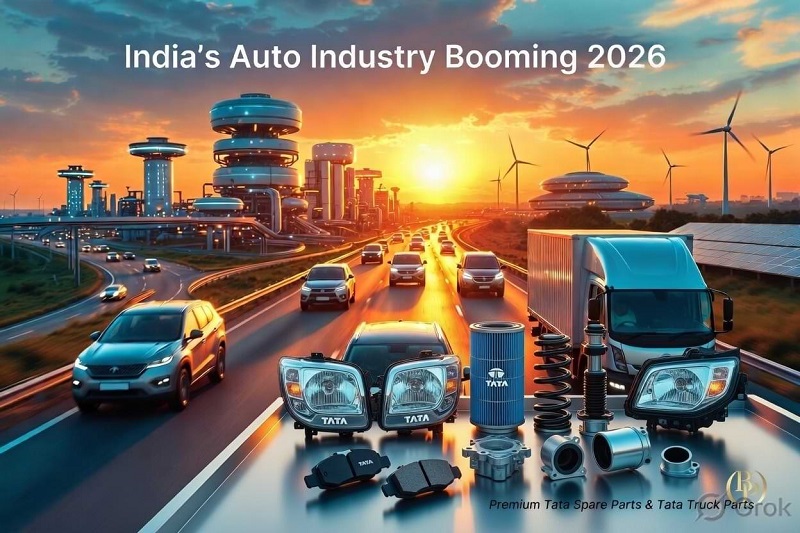
India’s auto industry has entered 2026 on an unprecedented high note. With record-breaking sales across passenger vehicles, two-wheelers, commercial vehicles, and electric vehicles, the sector is delivering double-digit growth in several segments and contributing significantly to the nation’s economic momentum. According to the latest data from the Society of Indian Automobile Manufacturers (SIAM), FY26 closed with passenger vehicle sales touching a historic 4.7 million units — a 9% jump from the previous year. Two-wheelers and commercial vehicles also posted all-time highs, while exports maintained strong double-digit momentum into the new fiscal. This isn’t just a cyclical upswing; it’s a structural transformation powered by policy reforms, rising consumer confidence, technological shifts, and robust domestic and global demand.
At BP Impex, a leading exporter of high-quality auto spare parts since 2009, we witness this boom firsthand every day. As a star-rated export house and AEO-certified company based in Delhi, we supply genuine and aftermarket components that keep India’s growing fleet on the road. This blog explores the key reasons behind the industry’s stellar performance in 2026 and how the aftermarket ecosystem, including reliable suppliers like BP Impex, is playing a vital supporting role.
A Snapshot of Record-Breaking Performance in FY26
The numbers tell a compelling story. Passenger vehicle dispatches reached approximately 4.7 million units in FY26, driven largely by the SUV segment, which now accounts for nearly two-thirds of sales. Two-wheelers surged past previous records with strong rural and semi-urban demand, while commercial vehicles recovered sharply in the second half of the fiscal. Tata Motors, for instance, reported 14% year-on-year growth in commercial vehicle sales, reaching 428,329 units for the full year.
Exports added another layer of strength. India shipped over 5.3 million vehicles in FY25, and the momentum continued with double-digit growth in the first half of FY26, reflecting global acceptance of “Made in India” vehicles. Electric vehicle penetration in the passenger segment is accelerating toward the 12-18% range, supported by policy incentives and falling battery costs. These figures underscore a sector that has not only recovered from pandemic-era disruptions but has reset at a higher baseline.
Key Factors Driving Record Auto Sales in India FY26
Several interconnected forces are fueling this expansion. First and foremost, macroeconomic stability has played a foundational role. India’s GDP continues to grow at a healthy 6.5-7% clip, boosting disposable incomes, especially in rural areas where agricultural recovery and government spending have unlocked pent-up demand for two-wheelers, tractors, and entry-level cars.
Consumer sentiment has been further lifted by improved affordability. Successive repo rate cuts by the Reserve Bank of India have lowered EMIs, making vehicle ownership more accessible. Infrastructure development — from expanded highways to smart cities — has increased the need for personal and commercial mobility. Urbanization and a growing middle class are shifting preferences toward premium features, safety, and connectivity, accelerating the move away from sedans toward SUVs and utility vehicles.
How GST Rationalization Boosted Vehicle Affordability 2026
One of the biggest catalysts has been the rollout of GST 2.0 and related tax reforms. The rationalization of GST rates on vehicles, combined with income tax relief measures announced in the Union Budget, has directly reduced the on-road price of cars and commercial vehicles. This policy intervention injected fresh momentum, particularly in the second half of FY26, leading to record monthly sales in several categories.
For buyers, the savings have been tangible — often translating into thousands of rupees per vehicle. Manufacturers have passed on these benefits while launching new models packed with advanced features. The result? A virtuous cycle of higher volumes, better capacity utilization at plants, and increased employment across the value chain. The auto sector’s contribution to GST collections remains significant, reinforcing its position as a key economic driver.
Impact of EV Policies on Indian Automotive Growth 2026
The electric vehicle transition is no longer a distant vision — it’s a present-day reality reshaping the industry. Government initiatives under the PLI scheme for automobiles and auto components, along with the PM E-Drive program, have accelerated local manufacturing of batteries, motors, and chargers. Customs duty benefits on lithium-ion cells extended until 2028 have further lowered costs.
Brands like Tata Motors and Mahindra have led the charge, with EV sales crossing 200,000 units in FY26. Models featuring advanced driver assistance systems (ADAS), connected car technology, and longer ranges are finding strong takers among urban buyers conscious of running costs and environmental impact. Even two-wheelers and three-wheelers are electrifying rapidly, supported by state-level subsidies and charging infrastructure expansion. This shift is not only reducing India’s oil import bill but also positioning the country as an emerging EV export hub.
Rising Demand for SUVs in Indian Car Market 2026
The SUV boom deserves special mention. Consumers are increasingly opting for vehicles that offer higher ground clearance, spacious interiors, and a commanding presence on Indian roads. From compact models to mid-size and luxury SUVs, every segment has seen robust growth. New launches with modern design, powerful yet efficient engines, and feature-rich cabins have captivated buyers.
This premiumization trend has lifted average selling prices and margins for manufacturers. It has also stimulated demand for related ecosystems — from tires and alloys to advanced electronics and safety components. Rural buyers, empowered by better roads and higher incomes, are upgrading from motorcycles to entry-level SUVs, further broadening the market base.
Export Opportunities for Indian Auto Manufacturers 2026
India’s auto industry is no longer dependent solely on domestic demand. Global markets are embracing Indian vehicles for their quality, value, and reliability. Double-digit export growth in the first half of FY26 highlights strong shipments to Europe, Africa, Latin America, and the Middle East. Two-wheelers and commercial vehicles lead the charge, but passenger cars and EVs are gaining traction.
Favorable trade agreements, competitive pricing, and compliance with international safety and emission norms have helped Indian manufacturers carve out a larger global share. This export engine provides a buffer against any domestic slowdowns and creates economies of scale that benefit local consumers too.
Looking for genuine Tata Spare Parts & Tata Truck Parts? Buy Tata Spare Parts online from a trusted exporter – BP Impex. Fast shipping & best quality guaranteed.
Commercial Vehicle Recovery and Infrastructure Push
The commercial vehicle segment, critical for logistics and freight, staged a strong comeback in the latter half of FY26. Improved freight demand, GST reforms, and infrastructure projects under schemes like Bharatmala have boosted truck and bus sales. Tata Motors’ 25% growth in Q4 FY26 commercial vehicles exemplifies this recovery.
As goods movement increases across the country’s expanding highway network, the need for durable, efficient, and low-maintenance vehicles grows. This segment’s performance directly supports overall industrial output and last-mile connectivity.
Challenges on the Horizon
Despite the boom, the industry faces headwinds. Rising commodity prices, geopolitical uncertainties in West Asia, and potential supply chain disruptions could pressure margins. Regulatory tightening on emissions (CAFE norms) and safety standards requires continuous investment in R&D. However, the sector’s resilience, backed by policy support and innovation, suggests these challenges will be navigated successfully.
Role of Aftermarket Spare Parts in Sustaining Auto Industry Boom
With millions of additional vehicles hitting the roads annually, the aftermarket segment is experiencing parallel growth. Vehicle owners and fleet operators prioritize timely maintenance and Genuine Tata Truck Parts to maximize uptime and resale value. This creates sustained demand for high-quality components across passenger cars, two-wheelers, and commercial vehicles.
In this dynamic landscape, trusted suppliers play a crucial role in keeping the ecosystem running smoothly. For those maintaining Tata vehicles, quality Tata Spare Parts have become essential for ensuring optimal performance and longevity. Similarly, in heavy-duty applications, dependable Tata Truck Parts deliver the reliability that operators demand under tough operating conditions.
BP Impex: Your Reliable Partner in the Auto Boom
At BP Impex, we take pride in supporting India’s auto industry growth through our extensive range of OEM and aftermarket spare parts for Tata, Mahindra, Ashok Leyland, and other leading brands. As an established exporter with a legacy dating back to 1973 via our sister concern Paulco Motors, we ensure global standards of quality, timely delivery, and competitive pricing. Whether you’re a domestic workshop, fleet operator, or international distributor, our AEO-certified operations guarantee seamless supply chain efficiency.
Our focus on customer-centric solutions helps businesses stay ahead in a fast-evolving market. By providing durable components that reduce downtime and maintenance costs, we contribute directly to the sector’s sustained momentum.
The Road Ahead for 2026 and Beyond
Looking forward, India’s auto industry is poised for continued expansion. Analysts project steady 6-8% growth in 2026, with EVs and premium segments leading the way. The combination of policy continuity, technological advancement, and strong fundamentals positions India as a global automotive powerhouse.
The boom we see today is the result of decades of reforms, innovation, and hard work across the value chain. At BP Impex, we remain committed to being a dependable partner for all stakeholders — from manufacturers to end-users — as the industry scales new heights.
If you’re in the auto trade or fleet management and seeking reliable spare parts solutions, connect with BP Impex today. Together, let’s keep India’s vehicles moving forward.


Leave a Reply